Skip to content
Independent information. Considered choices.
CBD Href. Home
Menu

The CBD Href guide

A clearer way to understand CBD.

Your guide to CBD, CBD gummies & CBD oil.

Independent information on products, ingredients, brands and comparisons. Understand the label, ask better questions and make informed choices.

Discover Compare Learn

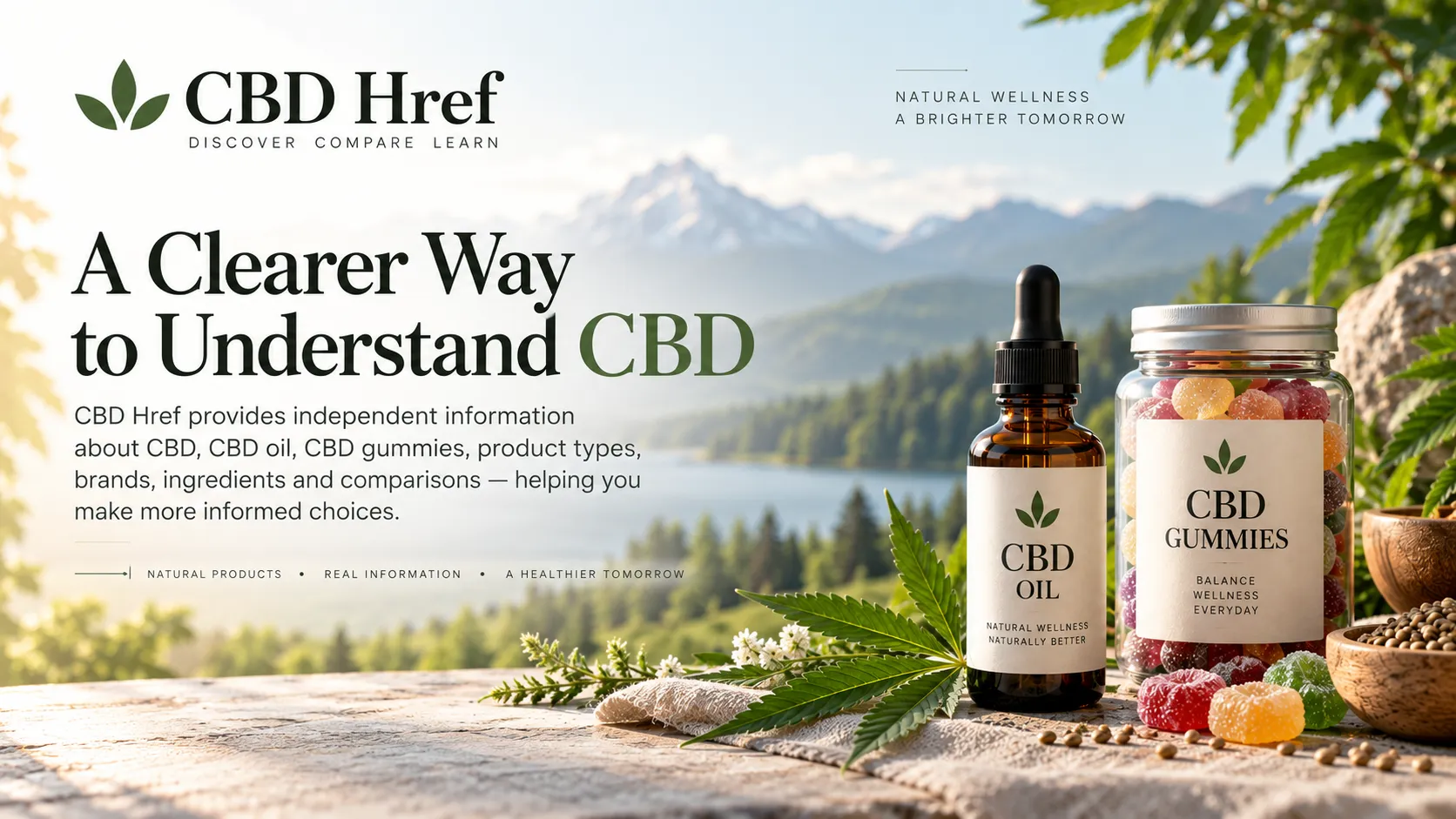
Illustrative CBD oil bottle and jar of gummies beside a mountain lake
A closer look at CBDIllustrative products

Understand the essentials

Know what’s in your product

Compare with confidence

Begin with the basics

What is CBD?

A familiar name.
A little more clarity.

CBD stands for cannabidiol, one of the naturally occurring compounds, or cannabinoids, found in Cannabis sativa, including hemp. Hemp-derived CBD describes cannabidiol sourced from hemp; it does not, by itself, tell you the strength, quality or complete contents of a finished product.

CBD and THC are different cannabinoids. THC is the main compound responsible for the intoxicating “high” associated with cannabis. CBD does not produce that same high, but this does not make it risk-free. Some CBD products also contain THC, so the full formulation matters.

Researchers study how cannabinoids interact with the body’s signaling systems, including the endocannabinoid system. These interactions are complex, and research on a particular preparation cannot establish benefits for every oil or gummy on sale. For scientific context, see the NCCIH overview of cannabis and cannabinoids.

Start with three questions: what format is it, how much cannabidiol does it contain, and what does its laboratory report show?

Two familiar formats

Same starting point. Different forms.

Learn what to compare
The liquid format

CBD oil

CBD oil usually combines a hemp extract or isolated cannabidiol with a carrier oil, such as medium-chain triglyceride (MCT), hemp seed or olive oil. The carrier dilutes the extract and is part of the ingredient list, even when the front label emphasizes only CBD.

Concentrations vary. A bottle’s total milligrams are different from the amount in one milliliter or one labeled serving. Compare the volume and CBD concentration together; a larger bottle is not necessarily stronger. Dropper markings are more useful than assuming every drop is identical.

Full-spectrum CBD oil, broad-spectrum CBD oil and CBD isolate oil describe different extract compositions. Check the spectrum claim, carrier oils, added flavors and allergens. Hemp seed oil alone is not the same thing as CBD oil.

Look for third-party laboratory testing tied to the bottle’s batch number. The report should help verify CBD and THC amounts and show which contaminants were tested.

Understand the spectrum
The measured format

CBD gummies

CBD gummies are edible sweets formulated with cannabidiol. Some people prefer their flavor, portability and pre-measured amounts over measuring a liquid. Convenience does not make a gummy equivalent to an oil with a similar number on its label.

Check milligrams per gummy and per serving: a manufacturer may define one serving as two or more pieces. The total amount in the jar should also be clear. Spectrum types vary, just as they do in oils.

Read beyond the CBD concentration. Gummies can contain sugar, syrups, alternative sweeteners, colors and flavorings. Gelatin and pectin affect suitability for different dietary preferences. Added ingredients such as melatonin need their own consideration.

Look for batch-specific testing, allergen information and clear storage instructions. Keep gummies securely away from children and pets; their familiar appearance can make them easy to mistake for ordinary candy.

Read the buying checklist

Know your spectrum

Understanding different types of CBD

“Spectrum” describes the mix of compounds in an extract. It is a useful starting point, not a quality ranking or a guarantee of what a finished product contains.

01 / The broader plant profile

Full-spectrum CBD

Can contain cannabidiol alongside other naturally occurring hemp compounds, including other cannabinoids and terpenes. It may include legally permitted trace quantities of THC, depending on the product and jurisdiction. Check the actual laboratory results.

02 / A refined extract

Broad-spectrum CBD

Contains multiple hemp compounds and is typically processed to remove THC. That description does not guarantee absolute absence: laboratory detection limits and individual batches matter. A “THC-free” label deserves verification.

03 / Cannabidiol on its own

CBD isolate

Primarily contains isolated cannabidiol rather than a wider hemp extract. Finished isolate products may still include carrier oils, sweeteners or other ingredients. Purity claims should be supported by testing, not inferred from the name.

No spectrum type is universally superior. Compare the formulation with your requirements and verify the supporting documentation.

Look beyond the label

How to compare CBD products

A useful CBD product comparison puts like-for-like information side by side. The highest strength or lowest sticker price rarely tells the whole story.

A simple calculation

Price ÷ total CBD milligrams

For illustration, a $40 bottle containing 1,000 mg costs $0.04 per mg. This measures price, not safety or quality.

Amount & serving
Record total CBD, milligrams per serving and package size. Distinguish cannabidiol content from the total weight of hemp extract.
Format & ingredients
Compare similar product types and spectrum claims. Note carrier oils, flavors, allergens, sweeteners and other active ingredients.
Price & value
Calculate price per mg of CBD, then include shipping and any subscription conditions. Compare regular prices separately from introductory deals.
Independent testing
Find a Certificate of Analysis (COA) matching the batch. Check the laboratory, report date, cannabinoid results and available contaminant panels, including pesticides, heavy metals and residual solvents.
Brand transparency
Look for accessible contact details, hemp sourcing, manufacturing information and clear return terms. A report for a different product is not evidence for the one you are considering.

For additional product research, visit CBD Diff to compare CBD products (opens in a new tab). Check current labels and reports directly with the brand before deciding.

A more considered purchase

What to look for before buying CBD

Begin with a complete label and a readable COA. Confirm that the product name, batch identifier and measured strength agree. “Lab tested” without an accessible report tells you little about what was checked. Missing information is a reason to ask questions.

CBD dosage is not a universal number. A labeled serving is a manufacturer’s measure, not personalized medical advice. CBD can interact with medicines and has potential side effects, including liver injury. Discuss health questions with a qualified healthcare professional, especially if you take medication. The FDA’s CBD consumer information explains known risks and remaining uncertainties.

Check the rules where you live and where a product will be delivered. Availability online does not establish legality, safety or approval. Avoid sellers promising cures or guaranteed results.

The directory, taking shape

Discover CBD brands & products

CBD Href is being developed into a searchable resource for manufacturers, formulations, strengths and ingredients. These are the categories we plan to organize; product listings and brand comparisons are not yet available.

01

CBD oils

Compare concentrations, spectrum types, bottle sizes, carrier oils and price per milligram.

Directory planned
02

CBD gummies

Review CBD per piece, serving sizes, sweeteners, dietary ingredients and package counts.

Directory planned
03

CBD capsules

Explore capsule materials, CBD amounts, carrier ingredients and the number of servings.

Directory planned
04

CBD topicals

Review creams and balms by formulation, fragrance, package size and labeled CBD content.

Directory planned
05

CBD vape products

Research ingredients and category-specific risks. Inhaled products are distinct from oral oils.

Research coverage planned
06

CBD for pets

Examine animal-specific labeling and evidence limitations. Consult a veterinarian about use.

Research coverage planned

Good questions, clear answers

Frequently asked questions about CBD

A quick reference for the terms you’ll see most often.

What is CBD?

CBD is cannabidiol, a cannabinoid naturally found in Cannabis sativa, including hemp. It differs from THC and does not produce the same intoxicating high.

What is CBD oil?

CBD oil generally contains cannabidiol or hemp extract mixed with a carrier oil. Check CBD per milliliter, the ingredient list and the batch laboratory report.

What are CBD gummies?

CBD gummies are edible sweets containing cannabidiol. Compare the amount per piece with the stated serving size, and check sweeteners, allergens and additional active ingredients.

Does CBD contain THC?

CBD itself is a different molecule from THC. A CBD product can contain both, particularly when labeled full-spectrum. Verify THC results on a batch-specific COA rather than relying only on marketing terms.

How do full-spectrum and broad-spectrum CBD differ?

Both can contain multiple hemp compounds. Full-spectrum extracts may retain trace THC; broad-spectrum extracts are typically processed to remove it. Laboratory results and detection limits matter for either description.

What should I look for when buying CBD?

Look for clear CBD amounts, complete ingredients, a matching COA and transparent brand information. Check applicable laws and consult a healthcare professional about health questions or medication interactions.

What is a CBD Certificate of Analysis?

A COA is a laboratory report for a tested sample. It can show cannabinoid concentrations and contaminant results. Confirm the batch, test date and testing scope; not every report covers every potential contaminant.

How can I compare CBD products?

Compare similar formats using CBD per serving, spectrum, ingredients, testing and price per milligram. Keep promotional prices separate from regular costs and verify information with the manufacturer.

The reading room

Explore more CBD resources

Return to the details that matter for your research.

Clarity comes first

About CBD Href

CBD Href aims to make CBD information easier to navigate by organizing product characteristics, brands and comparisons in a clear, accessible format. This first edition focuses on the essentials that help readers interpret a label and evaluate a product’s documentation.

Our editorial approach is to distinguish product descriptions from evidence, link to primary health information and explain the limits of a comparison. We do not claim to have tested products featured in the illustrative imagery or rank a product as universally “best.”

A note on affiliate links. CBD Href may eventually use affiliate links. When affiliate partnerships are introduced, eligible links will be clearly disclosed. This page currently contains no affiliate links.